Choosing fabrics for sensitive skin begins with noticing how cloth behaves against your body. A soft label can still hide rough fibers, dyes, finishes, or trapped heat. The best choice depends on your symptoms, climate, activity, and personal tolerance. There is no universal “perfect” fabric. That is easy to forget.
The question “why do certain fabrics irritate sensitive skin” deserves a practical explanation. Friction can scrape delicate areas, especially around collars, waistbands, and underarms. Heat and sweat may increase discomfort. Some people react to wool fibers, synthetic finishes, detergents, or textile dyes. Others tolerate the same materials without trouble. Cotton, linen, silk, and lyocell may feel comfortable, but comfort is not guaranteed. Fabric structure matters too. A loose, breathable weave can feel cooler than a tightly packed one. Dermatologists commonly consider irritation, allergy, and existing skin conditions when assessing textile reactions. Still, fabric alone may not explain every flare-up.
Start with a small test area. Wear a new shirt for a few hours before using it all day. Check the inner seams, labels, elastic, and rough embroidery. Wash garments with a fragrance-free detergent, then rinse them thoroughly. Keep a simple note of the fabric, weather, activity, and skin response. This creates useful evidence instead of relying on memory. No fabric choice is flawless. Even careful testing can mislead when stress, sweat, or skincare products change. If redness, swelling, pain, or persistent itching develops, seek advice from a qualified healthcare professional.
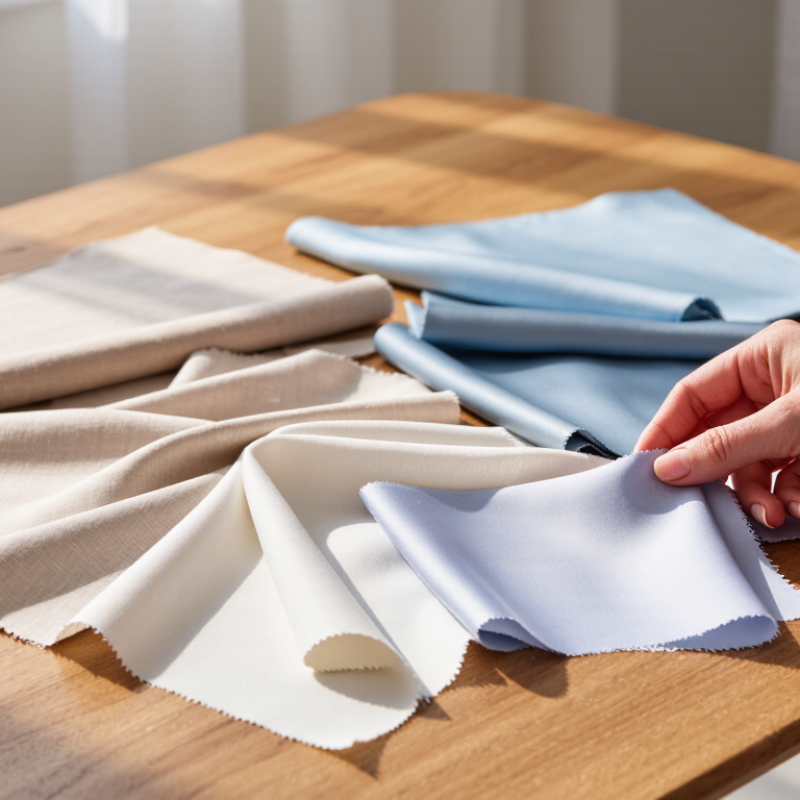
How to Choose Fabrics for Sensitive Skin?
Define Skin-Contact Risks Using Dermatology and Textile Standards
Sensitive skin is not simply a fiber-label issue. It is a skin-contact risk problem. Dermatology separates irritant dermatitis from allergic contact dermatitis. Friction, sweat, heat, dyes, and finishing chemicals can act together. The American Academy of Dermatology identifies itching, redness, and inflammation as common contact dermatitis symptoms. The wording is broad, but it matters: natural fibers are not automatically safer.
Textile Exchange’s 2024 Materials Market Report estimates that global fiber production reached 132 million tonnes in 2023. This scale increases the importance of chemical controls, not just fiber selection. For clothing touching the neck, check evidence for restricted dyes, formaldehyde, heavy metals, and nickel release. ISO 3071 evaluates textile extract pH, while AATCC TM112 measures formaldehyde release. These tests do not diagnose allergies. They show whether materials were assessed under defined conditions.
In practice, inspect seams, elastic edges, and rough prints before buying. Wash new garments with fragrance-free detergent, then dry them fully. Loose, breathable fabric may reduce heat and rubbing. A tightly dyed fabric may still cause irritation. I have made this mistake: trusting softness as proof of safety. It is not. Persistent redness, cracking, or swelling deserves a dermatologist’s patch-test assessment. Keep the garment and care label for review.
Sensitive skin needs a dry, low-friction surface. AATCC TM195 measures wetting time, absorption rate, spreading speed, one-way transport, and Overall Moisture Management Capacity (OMMC). These metrics reveal more than fiber names alone.
Polyester often spreads liquid quickly and dries faster.
Cotton absorbs well, yet can hold moisture against the skin.
Viscose usually shows high absorption but may dry slowly.
Wool can buffer moisture vapor, although its surface may feel prickly.
Fiber data tables commonly list moisture regain near 0.4% for polyester, 8.5% for cotton, and above 13% for wool. Construction changes everything.
Ask a laboratory for the full TM195 profile. Short wetting time is useful. Strong one-way transport is better. A high OMMC value suggests balanced moisture movement, but it is not a skin-safety certificate.
AATCC’s method evaluates liquid management, not allergy, irritation, or microbial risk. Seams, dyes, finishes, and washing residues still matter. The Textile Exchange Materials Market Report 2024 emphasizes that fiber choice must be assessed within the complete product system.
That point is easy to overlook. In practical testing, place the fabric against a controlled sweat solution, then inspect the inner surface after repeated washing. Some fabrics perform impressively when new and disappoint later. Real wear is less tidy than laboratory data.
When skin feels warm, damp, or trapped, fabric breathability becomes important. Air movement matters. ASTM D737 provides a controlled way to assess it. The method measures airflow passing through a textile under a specified pressure difference. Results are commonly reported as airflow volume per area and time. Higher permeability often suggests easier ventilation, but it does not automatically guarantee comfort.
A loose, open construction may allow air to pass freely. However, high permeability can reduce wind protection and warmth. Fiber type, yarn structure, fabric weight, and finishing treatments also influence skin contact. Ask for the ASTM D737 result, test pressure, fabric condition, and sample construction. Compare fabrics tested under the same conditions. Otherwise, the numbers may create false confidence.
In practical fabric evaluation, I would inspect the material after washing, not only when it is new. Detergent residue, shrinkage, and surface changes can alter airflow. Testing before and after laundering can reveal useful differences. One weakness remains. ASTM D737 measures air passage, not friction, moisture absorption, chemical residues, or personal allergy responses. A breathable fabric may still feel rough or irritating. Use the result as one evidence-based filter, then examine softness, seams, dyes, and real wearing conditions. Comfort is personal. The laboratory cannot fully reproduce it.
Sensitive skin reacts to more than fiber type. Residual dyes, formaldehyde-releasing finishes, and coating chemicals can remain near the body. That is why OEKO-TEX STANDARD 100 limits deserve closer attention. Its official criteria cover more than 1,000 harmful substances across tested textile components. Limits become stricter for products touching babies or intimate areas. Still, certification is not a medical guarantee. Human reactions vary.
Textile Exchange’s 2024 Materials Market Report estimated 124 million tonnes of fiber were produced globally in 2023. It projects roughly 160 million tonnes by 2030. At that scale, safer chemistry cannot rely on appearance or softness alone. Ask for a current test certificate, not only a hangtag claim. Check the product class and every component, including thread, print, elastic, and buttons. Wash new garments before wearing them. A mild, fragrance-free detergent may reduce surface residues, although washing cannot correct every chemical issue. That distinction is easy to miss.
How to Choose Fabrics for Sensitive Skin?
When skin reacts easily, fabric labels deserve close attention. “Organic” alone does not prove fiber content, processing, or comfort. GOTS requires at least 95% certified organic fibers for products labeled “organic.” Products with 70% certified organic fibers may use a qualified “made with organic” claim. This difference matters. A shirt containing 5% conventional fiber can still meet the higher claim, but the remaining materials and finishes need review.
Look for a valid GOTS certification number, not only a printed leaf symbol. The standard also controls chemical inputs, wastewater treatment, and social criteria throughout certified processing. That broader chain gives shoppers more useful evidence than a vague sustainability statement. Textile Exchange’s Materials Market Report 2024 estimated global fiber production at 124 million tonnes in 2023. With production projected to reach 160 million tonnes by 2030, clearer verification becomes increasingly important.
Touch the fabric before buying. A smooth cotton jersey may feel safer than rough linen, but personal reactions differ. Wash new clothing first, using fragrance-free detergent, then check seams around the neck and waist. I have found that “natural” does not always mean gentle. Some dyes, elastic fibers, or finishing agents may still irritate sensitive skin. Certification reduces uncertainty, but it cannot predict every individual response. A small trial area is sensible. Labels can mislead.
A practical comparison of fabric properties, certification checks, and skin-comfort considerations
| Fabric or Checkpoint | Why It May Suit Sensitive Skin | Potential Concern | What to Verify | Practical Selection Tip |
|---|---|---|---|---|
| Organic cotton | Generally soft, breathable, and absorbent; suitable for garments worn directly against the skin. | Dyes, finishing agents, rough seams, or residual detergent may still cause irritation. | A valid certification and product scope, not only the word “organic” on packaging. | Choose smooth, lightweight fabric and wash it before first wear. |
| Hemp or linen | Plant-based fibers can be breathable and durable, with good moisture management. | New fabric may feel coarse or stiff and can be uncomfortable for highly reactive skin. | Fiber content, fabric finishing, and surface smoothness. | Look for washed, softened, or blended versions if texture is a concern. |
| Lyocell or modal | Often has a smooth surface and comfortable drape; can help reduce friction from rough fabric. | The fiber type alone does not confirm low chemical exposure or organic origin. | Specific certification, dyeing process, and any added treatments. | Prefer products with clear fiber percentages and chemical-safety information. |
| Wool | Provides warmth and moisture buffering for people who tolerate animal fibers. | Coarse fibers can feel itchy; lanolin or finishing chemicals may be problematic for some individuals. | Fiber fineness, finishing treatments, and personal tolerance. | Try a fine, smooth layer or wear it over a soft base layer. |
| Polyester or nylon | Can be durable, quick-drying, and useful for performance clothing. | May retain heat or odor and can feel less comfortable when sweat and friction are present. | Breathability, moisture management, dyes, and skin response. | Use cautiously for prolonged skin contact, especially in hot or humid conditions. |
| Fabric construction | Smooth knits, low-friction surfaces, and breathable structures can improve comfort. | Loose fibers, heavy seams, labels, elastic, and rough edges may irritate even a soft fiber. | Surface feel, seam placement, label design, and garment fit. | Prioritize softness and construction over fiber claims alone. |
| GOTS “Organic” claim | Provides a defined standard covering organic fiber content and environmental and social processing criteria. | Certification does not guarantee that every person will tolerate the garment. | GOTS “organic” labeling requires at least 95% certified organic fibers. | Check the certification label, certifier details, and transaction or product documentation. |
| GOTS “made with organic” claim | Offers a verified organic-fiber option when the product does not meet the higher organic-content threshold. | The product may contain a larger proportion of non-organic fibers. | GOTS allows this label for products containing at least 70% certified organic fibers. | Read the exact label wording and fiber-content percentage. |
| Pre-washing and detergent | Washing can remove manufacturing residues and excess dye and may soften the fabric. | Fragrances, optical brighteners, and detergent residue may trigger discomfort in some people. | Care instructions and personal response to laundry products. | Use a fragrance-free detergent, rinse thoroughly, and avoid fabric softener if irritation is a concern. |
Note: “Organic” describes the verified fiber content and processing standard; it is not a medical guarantee. Persistent or severe skin reactions should be discussed with a qualified healthcare professional.
Choose a smooth, breathable fabric with low friction and good moisture movement. Personal comfort still varies.
Moisture testing measures wetting time, absorption, spreading speed, one-way transport, and overall moisture management.
Not necessarily. Cotton absorbs well but may hold dampness against the skin. Dryness matters too.
Polyester often spreads liquid quickly and dries faster. Viscose absorbs strongly but may dry slowly. Wool can buffer vapor but feel prickly.
Yes. Knitting, thickness, seams, and surface texture can change performance dramatically. Fiber names alone are incomplete.
No. Moisture testing does not measure allergies, irritation, or microbial risk. It is useful evidence, not a medical guarantee.
Check dyes, finishes, thread, elastic, prints, buttons, seams, and labels. Residues may remain near the body.
Look for a current certificate number and the certified fiber percentage. A 95% organic content claim is stronger than a vague label.
Yes. Wash it with mild, fragrance-free detergent, then inspect the fabric after repeated washing. New fabric performance can disappoint later.
No. Natural fibers may still contain irritating dyes, elastic materials, or finishing agents. Try a small skin area first.
Choosing fabrics for sensitive skin requires more than relying on softness or appearance. The key question is: why do certain fabrics irritate sensitive skin? Irritation may result from friction, trapped moisture, poor airflow, chemical residues, dyes, or finishing agents. Dermatology principles and textile standards can help identify these risks. Fiber performance should be compared through moisture-management data, including AATCC TM195 measurements, which indicate how effectively a fabric spreads and releases moisture. Breathability can also be assessed with ASTM D737 air-permeability testing, helping determine whether air can pass through the material comfortably.
Consumers should additionally screen dyes and finishes against the limits established by OEKO-TEX STANDARD 100, especially when fabrics will remain in prolonged contact with the skin. Organic claims should be verified carefully: under GOTS requirements, a textile must contain at least 95% certified organic fibers to be labeled “organic.” Combining these checks with personal experience and professional dermatological advice can make fabric selection safer, more comfortable, and better suited to sensitive skin.

Faber Fashion