In 2026, clothing choices reflect changing workplaces, social settings, and personal comfort. Hybrid work has made the old office dress code less predictable. McKinsey & Company and The Business of Fashion reported in The State of Fashion 2025 that consumers increasingly value versatility, comfort, and practical design during economic uncertainty. That shift helps explain why casual and smart casual styles now overlap so often.
So, what is the difference between casual and smart casual? Casual clothing prioritizes ease, movement, and relaxed proportions. Think of a clean T-shirt, straight-leg jeans, canvas sneakers, or a lightweight hoodie. Smart casual keeps comfort but adds structure and refinement. A knitted polo, pressed chinos, leather loafers, or an unstructured blazer can create that balance. The difference is rarely one item alone. Fit, fabric, color, grooming, and occasion all influence the final impression.
Context matters most.
The GlobalData Apparel market analysis has repeatedly highlighted the importance of adaptable, occasion-based clothing as consumers move between work, leisure, and social environments. A wrinkled shirt may appear casual in one setting but careless in another. Dark denim can look polished with loafers and a tailored overshirt, yet too relaxed for a formal client meeting. Even experienced stylists may disagree about the boundary. I sometimes find a clean sneaker surprisingly elegant, while another observer sees it as underdressed. That uncertainty is useful. This guide compares both styles through real outfits, workplace expectations, seasonal fabrics, and reliable styling principles, so you can dress with confidence without losing authenticity.
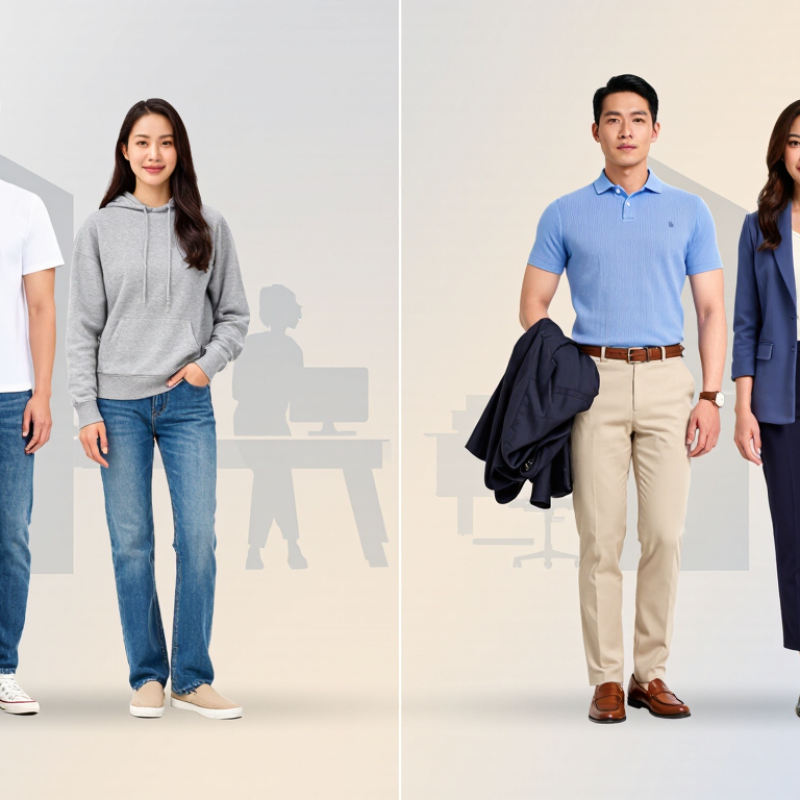
In 2026, casual clothing means relaxed, practical, and socially flexible. Think clean T-shirts, straight-leg jeans, knitwear, simple trainers, and soft overshirts. The outfit should look intentional, not unfinished. In my styling experience, fabric condition matters more than price. A faded collar can weaken an otherwise good look.
Smart casual adds structure without returning to formal officewear. Try a pressed Oxford-style shirt, tailored trousers, a fine-gauge sweater, or clean leather shoes. A lightweight jacket can sharpen the outfit quickly. The key difference is control: casual prioritizes comfort, while smart casual balances comfort with visible polish. Neither requires a tie.
Workplace behavior supports this shift. The 2024 Kastle Back to Work Barometer reported average office occupancy near 50% of pre-pandemic levels across major United States cities. Employees now move between home desks, shared offices, cafés, and client meetings. Clothing must adapt across settings. The 2024 Deloitte Global Human Capital Trends report also identified flexibility as a major workplace expectation. That makes rigid dress codes less practical.
Still, smart casual has no universal formula. A dark denim outfit may work in a creative office but feel too relaxed at a legal meeting. Weather, industry, age, and local culture change the answer. Fit remains decisive. Too loose looks careless. Too tight looks uncomfortable. When uncertain, add one structured piece and remove one distracting detail. There is room for mistakes. That is how personal judgment improves.
Casual clothing prioritizes comfort, ease, and movement. Think soft cotton T-shirts, relaxed jeans, knitwear, casual overshirts, and simple sneakers. Fabrics often feel lighter and less structured. Wrinkles may be acceptable, especially during travel or weekend errands. The fit should look intentional, though not overly precise. Too much looseness can appear careless.
Smart casual keeps comfort but adds visible structure. A collared shirt, fine-gauge sweater, tailored chinos, or an unstructured jacket can raise the outfit’s formality. Choose clean leather shoes, loafers, or refined minimal sneakers. Trousers should skim the body rather than cling. Darker colors and restrained patterns usually look more polished. Small details matter.
Fit changes everything. A plain shirt can look smart casual when it is pressed, well-fitted, and paired with tailored trousers. Conversely, expensive-looking clothing can seem casual when the fabric is heavily distressed or the silhouette is oversized. I still misjudge this balance sometimes, especially with relaxed jackets. A mirror check helps: examine the shoulders, trouser break, and shoe condition. Context also matters. A casual outfit may suit a café, while smart casual works better for a client meeting or evening gathering. Dress codes remain subjective. When uncertain, add one structured piece, then remove it if the outfit feels stiff.
Casual clothing suits relaxed plans, such as weekend errands, coffee with friends, or a park visit. Choose breathable fabrics, comfortable trousers, simple shirts, and clean everyday shoes. Fit still matters. A loose outfit can look careless, even when every item is comfortable. In my experience, one structured piece improves the whole appearance. Try a neat overshirt with straight-leg trousers.
Smart casual works when you need polish without formal stiffness. It fits office gatherings, restaurant dinners, gallery visits, and informal interviews. A collared shirt, fine-knit sweater, tailored trousers, or an unstructured jacket can create that balance. Keep colours controlled and footwear clean. Small details matter. Remove visible stains, check loose threads, and avoid heavily worn fabrics.
The choice depends on the setting, timing, and people attending. If the invitation feels unclear, dress slightly smarter and make comfort adjustable. A jacket can come off. A wrinkled T-shirt is harder to improve. Still, smart casual is not a fixed uniform. In a creative workplace, dark jeans may look appropriate, while the same jeans could feel too relaxed at a formal dinner. I sometimes overdress, and that can feel awkward. Yet being a little polished usually shows consideration. Consider the venue, then judge the details.
Building a casual wardrobe starts with real routines, not idealized outfits. Casual clothing should handle commuting, errands, coffee runs, and unexpected weather. Choose straight-leg trousers, clean cotton T-shirts, lightweight overshirts, knitwear, and comfortable leather or canvas shoes. Neutral colors create more combinations. Add one muted accent.
Keep it simple. Fit matters more than decoration. A shirt should sit smoothly across the shoulders, while trousers should break lightly above the shoe. Casual means relaxed and practical. Smart casual adds structure, such as an unlined jacket, pressed trousers, or a collared shirt. That distinction matters. The 2024 PwC Voice of the Consumer Survey reported that 46% of consumers shop online weekly, making accurate sizing and versatile purchases increasingly important. Still, online convenience can encourage careless buying. I have made that mistake.
Build around a small weekly rotation. Try three tops, two trousers, one overshirt, and two pairs of shoes. Each item should work in at least three outfits. The 2025 ThredUp Resale Report projects the global secondhand apparel market could reach $367 billion by 2029. That growth supports buying fewer, better-used pieces and checking fabric condition carefully. Look for dense cotton, washable wool, secure seams, and buttons that can be replaced. A slightly imperfect garment may become a favorite, but poor fit rarely improves. Reserve polished pieces for presentations, dinners, or offices with flexible dress codes.
This chart presents a practical 20-piece wardrobe planning baseline. Casual dressing gives more space to T-shirts, jeans, and sneakers, while smart casual adds more collared shirts, tailored trousers, knitwear, and loafers for polished everyday situations.
Smart casual sits between relaxed clothing and polished workwear.
It looks intentional, but never overly formal. In my experience, fit matters more than expensive materials. Choose clean trousers, dark straight-leg jeans, or tailored chinos. Add a tucked shirt, fine-knit sweater, or simple blouse. A structured jacket can sharpen the outfit without making it stiff.
For an office, keep colors quiet and fabrics pressed. Soft gray, navy, cream, and brown usually work well. For dinner, replace a plain shirt with a textured knit or elegant top.
Comfortable loafers, clean leather sneakers, or simple ankle boots can complete the look. At a daytime event, lighter fabrics and subtle patterns feel approachable. Avoid combining too many relaxed pieces.
An oversized top with loose trousers may look comfortable, but it can lose shape. I still make that mistake when dressing too quickly.
Tips:
Check the setting before choosing your outfit. A polished belt, neat hair, and clean shoes often improve the whole appearance. Keep one casual element and one refined element together. For example, pair tailored trousers with a relaxed cotton shirt. If the outfit feels unfinished, add a jacket or a small, practical accessory. Test your clothes while sitting and walking. Smart casual should look composed and feel usable.
Casual clothing looks relaxed, practical, and intentional. Clean T-shirts, straight-leg jeans, knitwear, and soft overshirts work well. Comfort leads.
Smart casual keeps comfort but adds structure and polish. Try a pressed collared shirt, tailored trousers, or a lightweight jacket. A tie is unnecessary.
Soft cotton, knitwear, and breathable materials suit everyday plans. Light wrinkles can be acceptable during travel or errands. Heavy wear looks careless.
Check the collar, shoulders, trouser break, and shoe condition. Remove stains and loose threads. Small details matter.
Casual works for weekend errands, coffee, park visits, and relaxed gatherings. Choose comfortable trousers, simple shirts, and clean everyday shoes. Keep the fit deliberate.
Smart casual suits office gatherings, restaurant dinners, gallery visits, and informal interviews. Add one structured item. Keep footwear clean.
Dress slightly smarter, then make comfort adjustable. A jacket can come off. A wrinkled T-shirt is harder to improve.
Sometimes. Dark jeans may suit a creative workplace but feel too relaxed at a formal dinner. Context changes everything.
Avoid clothing that hangs excessively or clings tightly. Trousers should skim the body. I still misjudge relaxed jackets sometimes, so a mirror check helps. Fit decides.
In 2026, casual and smart casual dressing both prioritize comfort, but they communicate different levels of polish. Casual outfits are relaxed, practical, and suitable for everyday activities, often built with simple tops, comfortable trousers, denim, knitwear, and easy footwear. Smart casual adds structure and refinement through cleaner silhouettes, coordinated colors, tailored layers, collared shirts, polished knitwear, and more sophisticated shoes. Understanding what is the difference between casual and smart casual helps you choose clothing that matches both the occasion and the impression you want to make.
Choose casual clothing for errands, travel, relaxed social plans, and informal workplaces where flexibility matters most. Select smart casual for dinners, creative offices, meetings, celebrations, or events that require a neat but approachable appearance. To build a versatile casual wardrobe, focus on comfortable basics that mix easily and suit your daily routine. For a smart casual wardrobe, combine relaxed essentials with structured pieces, pay attention to fit and grooming, and adjust your outfit according to the setting, time of day, and expected level of formality.

Faber Fashion